

December is an interesting month for health clubs. Some members are taking time off from their regular workout routines, families are busy with holiday activities, and plenty of people are telling themselves they will get serious about fitness after the new year. For gym owners, that can make December feel like a difficult month to generate new memberships.
But there is another side to December that often gets overlooked.
While people might be putting off their workouts, many are already thinking about their fitness goals for the coming year. They are thinking about losing weight, getting stronger, improving their health, or finding a gym that fits their lifestyle. They may not be ready to walk through your doors on December 12, but that does not mean they are not interested in joining.
At Members Today, we believe December presents a valuable opportunity for health clubs that understand how to reach these prospects before the January rush. The key is creating promotions that match how people are thinking and behaving during the holiday season, then using the right combination of health club direct mail, digital advertising, and local marketing to turn that interest into memberships.
December Marketing Should Focus on January Memberships
One of the most common mistakes health clubs make during December is evaluating their marketing campaigns only by the number of memberships sold before Christmas. While immediate enrollments are certainly valuable, they should not be the only measure of success.
Consider someone who receives a postcard from your gym during the first week of December. They like the offer, recognize the location, and make a mental note to check it out. A few days later, they see an advertisement for the same gym while searching online. They visit your website, read a few reviews, and look at your membership options.
That person may not join until December 28 or even January 3. Yet the buying process started weeks earlier with your December promotion.
This is why effective health club marketing requires looking beyond immediate responses. December campaigns should generate memberships now while building a healthy pipeline of interested prospects who are likely to enroll during the first few weeks of January.
For many clubs, that means creating a promotional calendar that begins in early December and continues through the new year, rather than treating December and January as completely separate marketing periods.

Create Holiday Promotions That Give People a Reason to Act
The challenge with December promotions is convincing someone to take action when they already have plenty of reasons to wait. A generic advertisement offering a gym membership is unlikely to accomplish much, particularly when prospects assume better deals will be available in January.
A stronger approach is creating an offer that provides an immediate benefit without requiring the prospect to begin an intense workout routine during the holidays.
For example, a health club might offer “Join in December and Pay Nothing Until January.” This allows someone to secure a membership while postponing their first payment until after the holidays. Another option is offering the remainder of December free when someone enrolls before a specific date.
Waiving enrollment fees can also be effective. If your club normally charges a $99 enrollment fee, eliminating that expense gives people a tangible reason to join without reducing the long-term value of their membership.
We generally recommend being careful with promotions that dramatically reduce monthly dues. A $19 membership might generate attention, but if your normal rate is $49, that discount can create long-term revenue problems. It may also attract bargain shoppers who have little interest in maintaining their memberships once the promotional period ends.
The strongest offers remove an obstacle to joining while protecting the value of your club.
Don't Overlook Holiday Gift Memberships
Most gym promotions are directed toward the person who will use the membership. December gives health clubs an opportunity to reach another audience: people shopping for gifts.
Personal training packages, short-term memberships, small-group training sessions, and fitness assessments can all make appealing holiday gifts. These offers work particularly well for clubs with premium services or specialized programs that are not always included in a standard membership.
The way these gifts are presented makes a difference. Simply advertising a gym membership as a Christmas gift can feel impersonal, especially if the recipient has not expressed an interest in joining. A package featuring three personal training sessions or a 30-day fitness experience may feel more thoughtful and less like an ongoing financial commitment.
Health clubs can promote these packages through email, social media, their websites, and displays inside the club. Existing members can be a particularly valuable audience because they already understand the services and may have family members or friends who would enjoy trying them.
Gift promotions also create an opportunity to introduce new prospects to your facility without immediately asking them to commit to a long-term membership.
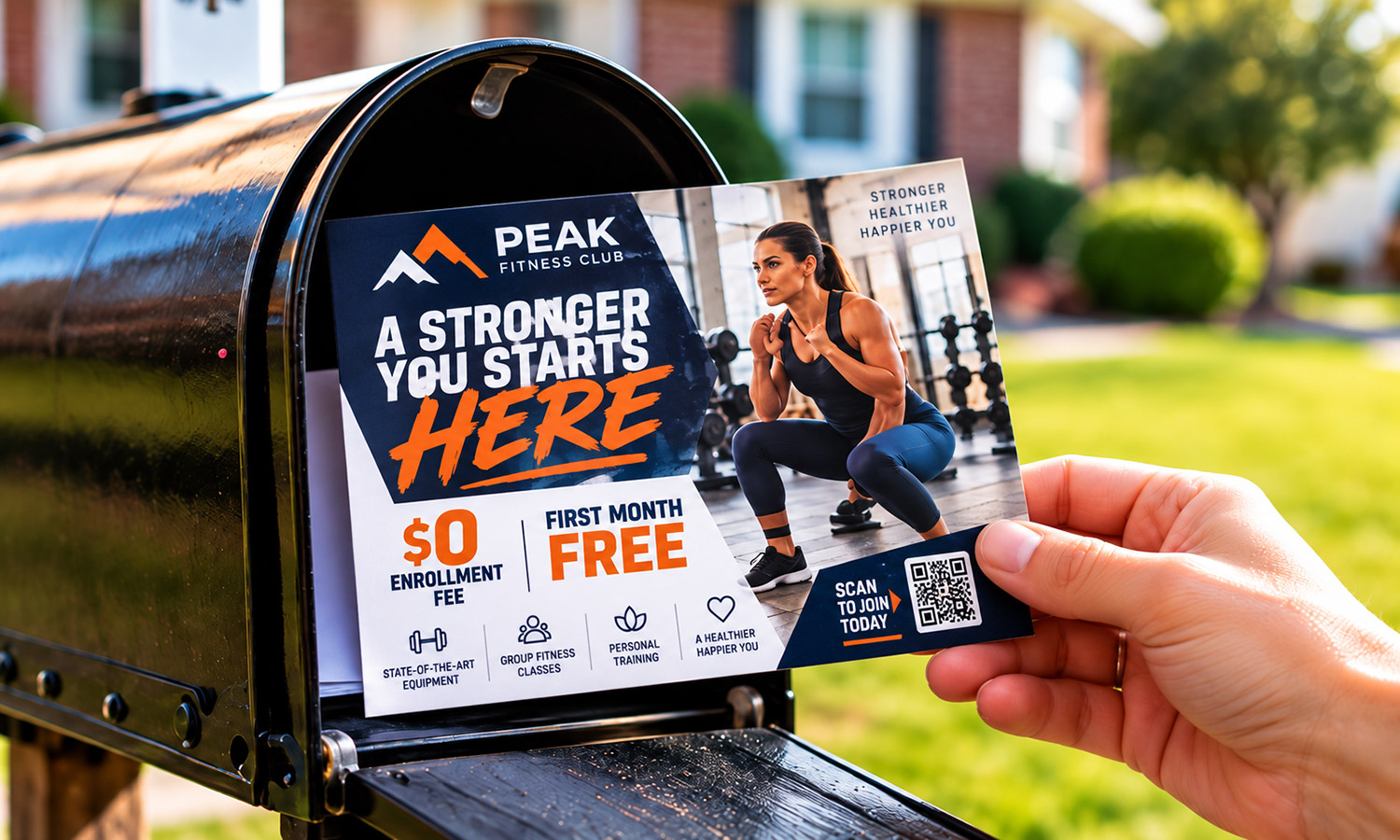
Direct Mail Can Help Your Gym Stand Out During the Holidays
December is a busy advertising month. Consumers are surrounded by retail promotions, holiday sales, and digital advertisements competing for their attention. While that creates competition, it also makes a well-designed direct mail postcard an effective way to reach households in your local market.
With health club direct mail, the focus should be on reaching households that are most likely to become members, not simply mailing the largest possible number of addresses.
A suburban fitness center may find that households within three to five miles provide the strongest opportunities. A downtown club could have a much smaller geographic service area, while a premium fitness facility might attract members from ten miles away or more.
The key is understanding your actual membership trade area.
At Members Today, we recommend examining where your current members live before developing a mailing strategy. If certain ZIP codes, neighborhoods, or postal carrier routes consistently produce members, those areas deserve attention. Competing facilities, traffic patterns, household characteristics, and driving convenience should also influence the mailing list.
Once the audience is established, the postcard needs a clear message. For most fitness direct mail promotions, we recommend one primary offer rather than several competing discounts.
Imagine a postcard featuring a clean, professional image of your fitness center with the headline:
“Your 2027 Fitness Goals Start Here!”
The supporting offer might read:
“Join by December 24 and Get $0 Enrollment Plus the Rest of December Free.”
The postcard should make it easy for someone to respond through a QR code, dedicated landing page, phone number, or promotional code. The offer should be visible immediately, and the expiration date should create a reasonable sense of urgency.
A December postcard does not need excessive holiday graphics to be effective. The message, offer, and images of your actual facility are usually more important than decorating every available inch with snowflakes and ornaments.
Combine Direct Mail With Digital Advertising
One of the strongest approaches to December fitness marketing is using direct mail and digital advertising together.
People rarely make a membership decision based on a single advertisement. Someone might receive your postcard, forget about it for a few days, and then search online for gyms near their home. Another person might see your Google ad after receiving the postcard and recognize your club immediately.
That familiarity can make your advertising more effective.
For example, imagine a regional health club mailing 25,000 households during the first week of December. The mailing introduces a holiday enrollment promotion and directs prospects to a dedicated landing page. During the same period, the club runs Google Search ads targeting people actively looking for gym memberships within the surrounding community.
Meta advertising can support the campaign by promoting the same offer to a local audience, while remarketing ads reconnect with people who previously visited the website.
The most important detail is consistency. If the postcard promotes free enrollment through December 24, the digital advertisements and landing page should reinforce that same offer. Conflicting promotions can confuse prospects and make it more difficult for your staff to explain the campaign.
This combination of health club direct mail and fitness digital marketing helps create repeated exposure without requiring every marketing channel to perform the same job.

Use Google Ads to Capture People Already Looking for a Gym
December is also a good time to prepare Google Ads campaigns for the increased interest in fitness that typically arrives around the new year.
Paid search works differently from direct mail or social media advertising because it reaches people who are already expressing interest through their searches. Someone typing “gym memberships near me” or “fitness center in [city]” is demonstrating a level of intent that is valuable to a health club.
We typically recommend organizing PPC campaigns around closely related searches. General gym memberships, personal training, branded searches, and specialized fitness programs can each benefit from their own targeting and messaging.
A club promoting a December enrollment special might use an advertisement featuring:
Headline: December Gym Membership Special
Supporting Message: Join Today and Pay $0 Enrollment. Start Your New Year’s Fitness Goals Early. Limited-Time Holiday Offer.
The advertisement should take the prospect directly to a page explaining the promotion rather than sending them to a general homepage where they have to search for details.
Budget decisions should depend on the size of the market, local competition, and how efficiently the club converts leads. A smaller gym in a suburban market may need a very different budget than a multi-location fitness chain competing in a major metropolitan area.
We also encourage gym owners to look beyond clicks and impressions. What matters is how many qualified prospects the campaign produces and how many of those prospects eventually become paying members.

Pay Attention to Membership Acquisition Cost, Not Just Cost Per Lead
Cost per lead is one of the most frequently discussed numbers in fitness advertising. It is useful, but it can also be misleading when viewed without additional information.
Suppose a December Facebook campaign generates 100 leads at $15 each. That sounds encouraging, especially compared with a Google Ads campaign generating leads at $30 each.
Now consider the membership results.
The Facebook campaign produces eight new memberships, while the Google Ads campaign produces 20. The lower-cost leads were not necessarily the better investment.
In this example, the Facebook campaign spent $1,500 and acquired eight members, resulting in an advertising acquisition cost of $187.50 per member. The Google campaign would cost $600 to acquire 20 members if it generated those members from 20 leads at $30 each, but that would represent an unusually high 100% close rate. A more realistic comparison would need to account for all leads generated, the total amount spent, and the number of actual memberships sold.
This is why we encourage clubs to track more than the initial cost per lead. Appointment scheduling rates, show rates, closing percentages, membership revenue, and retention all help determine whether a marketing campaign is profitable.
A prospect who costs more to acquire but remains a member for two years may be significantly more valuable than someone who joins through an aggressive discount and cancels after two months.
Make Sure Your Website Is Ready for Holiday Traffic
Even a strong December promotion can struggle if the website creates problems for interested prospects.
We have seen health clubs invest heavily in advertising while sending every visitor to a homepage that barely mentions the current promotion. The prospect clicks the advertisement, searches for membership information, and eventually leaves because the next step is not obvious.
For seasonal campaigns, a dedicated landing page is often a better choice.
The page should explain the holiday offer, show real images of the facility, highlight important membership benefits, and provide a simple way to request information. A short form collecting a name, phone number, and email address is usually enough to start the conversation.
It also helps to include a clear expiration date, membership details, and a few authentic customer reviews. Prospects should understand what they are responding to without needing to read several pages of fine print.
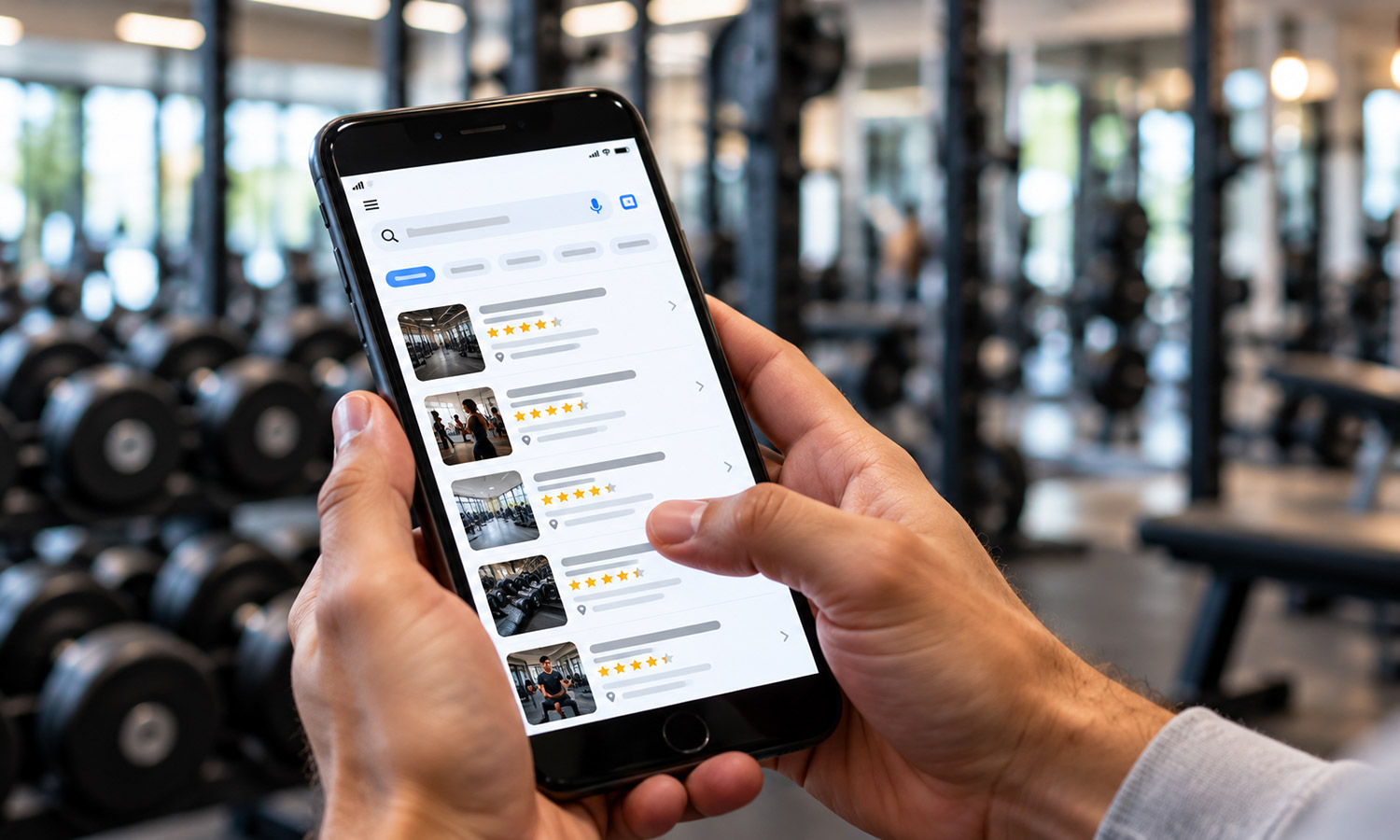
Your fitness SEO and local search presence play a supporting role as well. People who receive a postcard may search for your club by name instead of scanning the QR code. They might also compare your club against others in Google Maps or an AI-powered search experience.
Make sure your Google Business Profile has accurate holiday hours, updated photographs, and current contact information. A strong collection of genuine reviews can help reassure prospects who are unfamiliar with your facility.
These small details can make a meaningful difference when someone is choosing between two nearby gyms.

Build a Follow-Up Process for People Who Want to Start in January
Generating leads in December is only half the job. The other half is making sure those prospects are contacted, nurtured, and given a reason to complete their memberships.
One of the realities of holiday fitness marketing is that people frequently express interest before they are ready to begin working out. Someone might fill out a form on December 15 but explain that they are traveling until January 2.
That lead should not be treated as a dead opportunity.
Your sales team should be able to record the prospect’s preferred start date and schedule follow-up communications accordingly. A simple CRM process can make this much easier, especially for clubs generating dozens or hundreds of leads during a campaign.
For example, a prospect who responds to a postcard might immediately receive an email confirming the promotion. A membership advisor follows up with a call or text, answers questions, and attempts to schedule a tour. If the prospect wants to wait until after Christmas, the advisor records that preference and schedules another conversation.
A follow-up message between December 26 and December 30 can be particularly useful for people who were interested earlier in the month.
The goal is not to overwhelm prospects with daily sales messages. It is to maintain contact so that your gym remains familiar when they are ready to act.

Get Your Sales Team Ready Before the Promotion Starts
A surprisingly common problem with gym marketing campaigns has nothing to do with the advertising itself.
The advertisement works. Someone receives a postcard or clicks an online promotion. They call the club or walk through the front door, only to discover that the employee helping them does not know anything about the offer.
That is a frustrating experience for the prospect and an expensive mistake for the gym.
Before launching a December campaign, we recommend giving your membership team a simple campaign information sheet. It should explain the offer, qualifying requirements, expiration date, promotional codes, and any restrictions that apply.
Staff should also understand how to record the source of the lead and what to do when someone wants to wait until January.
For multi-location clubs, this becomes even more important. Every participating location needs to communicate the same information, especially when advertising covers several nearby communities.
A strong promotion supported by a prepared sales team can outperform a more aggressive offer that creates confusion at the front desk.
Don't Forget About Existing Members and Referrals
December marketing should not focus exclusively on finding new customers. Your current members can be a valuable source of referrals, upgrades, and additional revenue during the holiday season.
Members are spending time with friends, relatives, and coworkers who may be thinking about their own fitness goals. A well-timed referral promotion gives those conversations a reason to turn into membership inquiries.
For example, a club could offer an existing member a complimentary personal training session when they refer a friend who joins before January 10. The new member might receive a free fitness assessment or introductory training session as part of the promotion.
These incentives can be promoted through email, text messages, member newsletters, and signage inside the club.
December can also be a good time to offer upgrades to premium membership levels, personal training packages, or specialty fitness programs. These promotions create additional revenue opportunities while encouraging existing members to become more involved with the club.
That engagement matters for retention. Members who build relationships with instructors, participate in classes, and use additional services may develop stronger connections to the club. A good December campaign can help strengthen those relationships before the new year.
Plan Your December Campaign Before December Arrives
If there is one operational mistake that regularly limits holiday marketing results, it is waiting too long to start planning.
A gym owner decides on December 15 that the club needs a holiday promotion. The artwork still needs to be designed, the mailing list has not been prepared, the landing page is unfinished, and the Google Ads campaign has not been built.
By the time everything is ready, much of December is already gone.
We recommend beginning December campaign planning in November whenever possible. This provides time to evaluate previous promotions, select the target audience, finalize the offer, and coordinate direct mail delivery with digital advertising.
A practical schedule might look like this:
- Early November: Review previous campaign results, identify target markets, and finalize the promotional offer.
- Mid-November: Complete postcard artwork, mailing list preparation, landing pages, and digital advertising creative.
- Late November: Schedule the mailing, test tracking systems, and prepare the sales team.
- Early December: Launch the coordinated direct mail and digital marketing campaign.
- Mid-December: Review lead quality, appointment rates, and membership conversions. Adjust advertising where needed.
- December 26 through January: Follow up with interested prospects and increase emphasis on New Year’s enrollment opportunities.
A schedule like this gives each part of the campaign enough time to work while keeping the marketing, sales, and operational teams coordinated.
The Fitness Industry Is Changing, but Local Marketing Still Matters
Today’s health club prospects have more fitness options than ever before. Traditional gyms compete with boutique studios, personal training facilities, home workout programs, inexpensive membership chains, and online fitness services.
Consumers also have more ways to research those options. They compare Google reviews, watch videos, visit websites, check social media, and increasingly use AI-powered search tools to evaluate local businesses.
That makes building familiarity and trust an important part of gym marketing.
Your club may have excellent equipment, knowledgeable trainers, and a welcoming atmosphere. But if nearby prospects are not aware of those advantages, they may choose another facility simply because they recognize the name.
This is why we continue to recommend a coordinated approach to health club marketing. Direct mail builds local awareness, digital advertising captures interest, fitness SEO supports online visibility, and an organized sales process converts inquiries into memberships.
December offers an opportunity to bring those efforts together around a clear message at a time when many people are beginning to think seriously about their health and fitness goals.

Make December the Beginning of a Stronger January
December does not have to be a slow month for membership acquisition. With the right promotional strategy, it can become the foundation for a successful January.
The most effective campaigns give prospects a compelling reason to respond before the holidays are over. They reach households that are likely to become members, communicate a clear offer, and make it easy for interested people to take the next step.
Just as important, they recognize that many December prospects will not be ready to join immediately. A gym that captures those leads, follows up consistently, and keeps the offer in front of them has an opportunity to convert that early interest into memberships after Christmas.
At Members Today, we help health clubs develop marketing campaigns that connect direct mail, digital advertising, local search visibility, and membership acquisition strategies. We focus on the full process, from identifying the right households to making sure the leads generated by a campaign have a clear path toward becoming members.
The goal is not simply to send more postcards or generate more online traffic. It is to help your club attract qualified prospects, convert more memberships, and build a stronger membership base.
A well-planned December promotion can accomplish all three.
Frequently Asked Questions About December Gym Promotions
Gift certificates work well for personal training, specialty classes, and short-term fitness packages. They are especially appealing when the recipient can choose when to begin using the service.
Yes. Introducing a class in December can build awareness and generate registrations before January, particularly when the class addresses popular New Year’s fitness goals.
Different audiences may respond to different benefits, such as strength training, low-impact fitness, family activities, or personal training. Clubs can tailor their messaging to those interests while keeping offers straightforward and avoiding discriminatory eligibility rules.
Yes. Independent clubs can emphasize personal service, knowledgeable staff, specialized programs, and their connection to the local community instead of competing entirely on price.
Yes. Email allows clubs to reach existing members and interested prospects with holiday offers, class schedules, gift packages, and important enrollment deadlines at a relatively low cost.
Short-term memberships or winter-break packages can be effective in markets with a large student population. These offers are especially useful for students who want access to a local facility while away from campus.
A holiday food drive, charity workout, or community fundraiser can introduce new people to your facility while supporting a worthwhile local cause. The event should focus on genuine community participation rather than using the charitable activity solely as an advertising gimmick.
Generally, yes. Ongoing advertising can help maintain visibility for your regular services while the seasonal campaign focuses on a specific promotional offer.