
People are tired of being sold to by content that feels copied, pasted, and polished by a machine.
That does not mean AI is bad. It has a place. It can help businesses write faster, organize ideas, and keep up with the nonstop demand for content. But there is a real problem happening in the market right now. Consumers are seeing more emails, more ads, more social posts, more blogs, and more automated messages than ever before. A lot of it sounds the same. A lot of it feels empty. A lot of it disappears from memory the second the person scrolls past it.
Table of Contents
A Major Challenge for Health Clubs
A gym is not just selling access to equipment. A club is selling confidence, routine, coaching, community, health, and personal change. Those things require trust. If a prospect does not trust the club, they will not book the tour. They will not claim the trial. They will not walk through the front door.
That is why Health Club Direct Mail Marketing has become so valuable again. Direct mail gives people something physical, local, and real. It does not feel like another disposable digital message in a crowded feed. When done right, it helps a health club show up in the home, create recognition, and build trust before the first phone call ever happens.
At Members Today, we have seen this for years. Strong health club marketing is not about chasing every shiny tool. It is about using the right mix of trusted media, clear offers, clean design, and smart follow-up. Direct mail still works because people still respond to things that feel personal, useful, and connected to their neighborhood.

The Trust Problem in the AI Content Era
Consumers have learned to be skeptical.
They see ads with perfect stock photos. They get emails that sound friendly but feel automated. They read reviews and wonder if they are real. They see social posts from brands that sound almost identical. Even search results are packed with content that may answer a question but does not always feel like it came from a business that has real experience.
For health clubs, this matters more than many owners realize.
A person looking for a gym is often in a sensitive spot. They may be out of shape. They may feel nervous. They may have tried and failed before. They may be comparing your club against a low-cost gym, a boutique studio, a personal trainer, home workouts, and doing nothing at all.
If your marketing feels thin or generic, it can push them away.
The common mistake is thinking more content always means more trust. More blog posts. More social posts. More emails. More ads. More automation. But volume does not build trust by itself. In many cases, volume makes the message feel cheaper.
Trust comes from relevance.
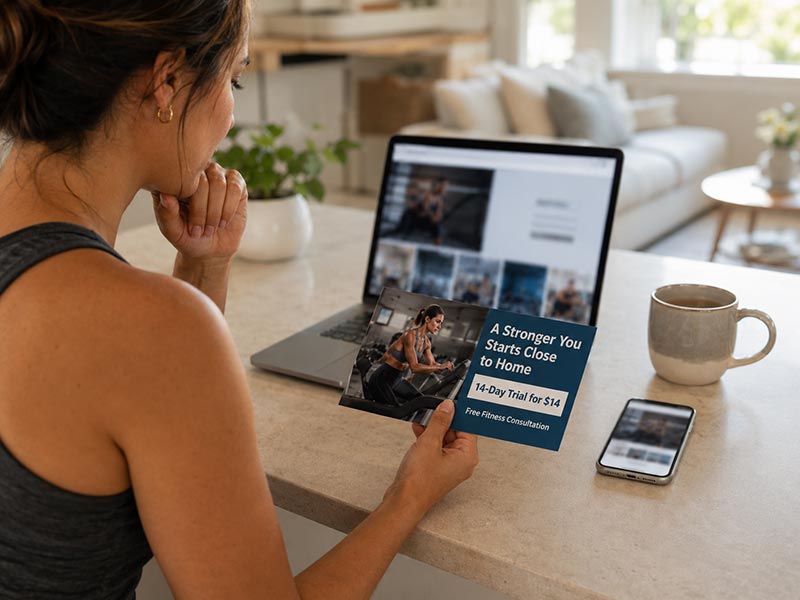
A homeowner receiving a clean, well-designed postcard from a local club that says, “Try us for 14 days and find a routine that fits your life,” may feel more grounded than seeing another digital ad that says, “Transform your body today.” The postcard has weight. It has a location. It has a real offer. It feels like it came from an actual business in their area.
That is where health club direct mail can do something digital ads often struggle to do.
Why Physical Mail Feels More Real
Direct mail has one advantage that digital channels cannot copy. It is tangible.
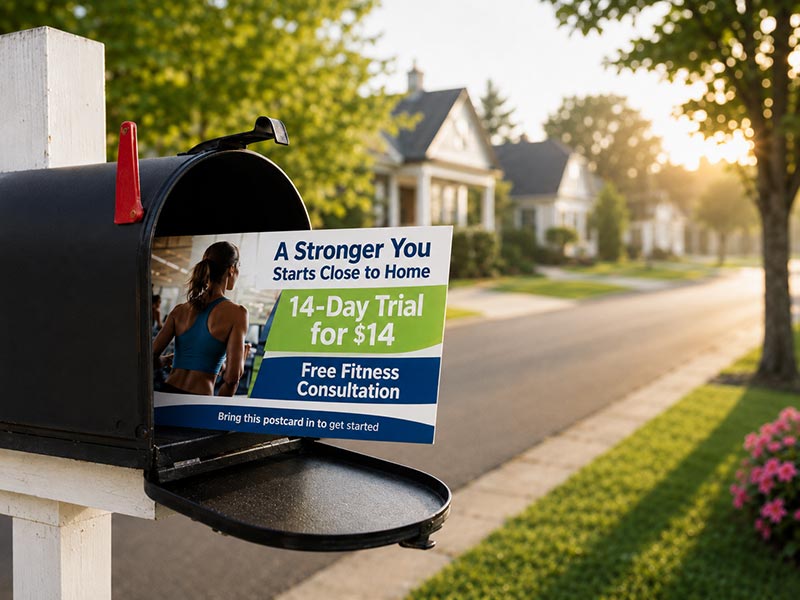
A postcard lands in the mailbox. A person holds it. They see the logo, the offer, the photos, the address, and the call to action. It may sit on the kitchen counter. It may get handed to a spouse. It may be pinned to the refrigerator. That small amount of physical presence gives the campaign more life than a digital impression that vanishes in two seconds.
For fitness businesses, this matters because the decision to join a club is rarely instant.
A prospect may need to think about cost, schedule, childcare, class options, comfort level, and whether the club feels like “their kind of place.” A good direct mail piece gives them time. It does not force an immediate click. It gives the offer room to breathe.
We have seen this with fitness direct mail promotions that use simple, local messaging. A postcard sent to homes within a 3- to 5-mile radius of a club can speak directly to the people most likely to join. The message can promote a limited-time enrollment offer, a family membership special, a new member trial, a personal training starter package, or a seasonal challenge.
The best pieces are not overloaded.
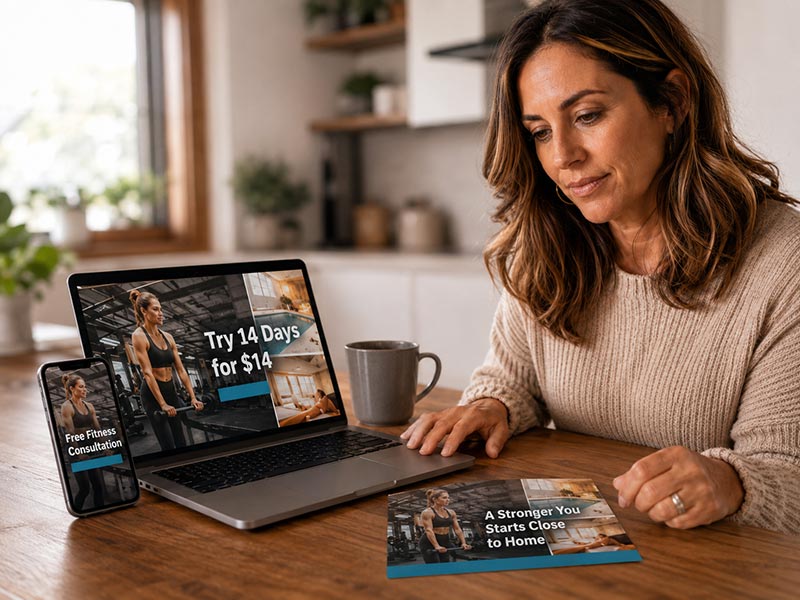
They usually include a clear headline, one primary offer, real club photos when available, a strong call to action, and simple ways to respond. That may include a phone number, landing page, QR code, and walk-in invitation. For higher-end clubs, the design should feel polished and premium. For family fitness centers, it should feel warm, active, and welcoming. For boutique-style training clubs, it should feel focused and personal.
The mail piece needs to match the club.
That is where many campaigns go wrong. A low-cost gym should not sound like a luxury wellness retreat. A premium club should not run a cheap-looking coupon that weakens its brand. Good fitness marketing respects the position of the business before it ever writes the offer.
Direct Mail Helps Health Clubs Look Local, Not Automated
One of the biggest benefits of Health Club Direct Mail Marketing is local trust.
Digital platforms are crowded with national brands, apps, influencers, online coaches, and lead sellers. A local health club has a different kind of advantage. It is part of the community. It has a real front desk. Real trainers. Real members. Real classes. Real people who will greet someone by name.
Direct mail helps make that local presence visible.
A postcard can mention nearby neighborhoods, a grand opening, a club renovation, a new class schedule, a summer membership special, or a local event. It can show the actual facility instead of generic fitness images. It can invite people to stop in, meet the team, and try the club without pressure.
That feels different.
A strong mail piece can say, “We’re right around the corner, and we’d love to help you get started.” That is a much better message than another broad digital ad competing with every other fitness offer on the internet.
This is one reason direct mail works well for new gym launches and grand openings. Before a club opens, people need to know it exists. During pre-sale, direct mail can promote founders rates and early access. Around opening week, it can drive tours and trial visits. After opening, it can support lead follow-up and help fill the pipeline once the initial excitement slows down.
For established clubs, direct mail can reintroduce the brand to people who may have forgotten about it. This is especially useful when a club has added new equipment, changed ownership, upgraded locker rooms, expanded classes, or improved its training programs.
A good campaign does not just say, “Join now.”
It gives people a reason to take another look.
The Best Direct Mail Campaigns Connect to a Sales Funnel
Direct mail should not sit by itself.
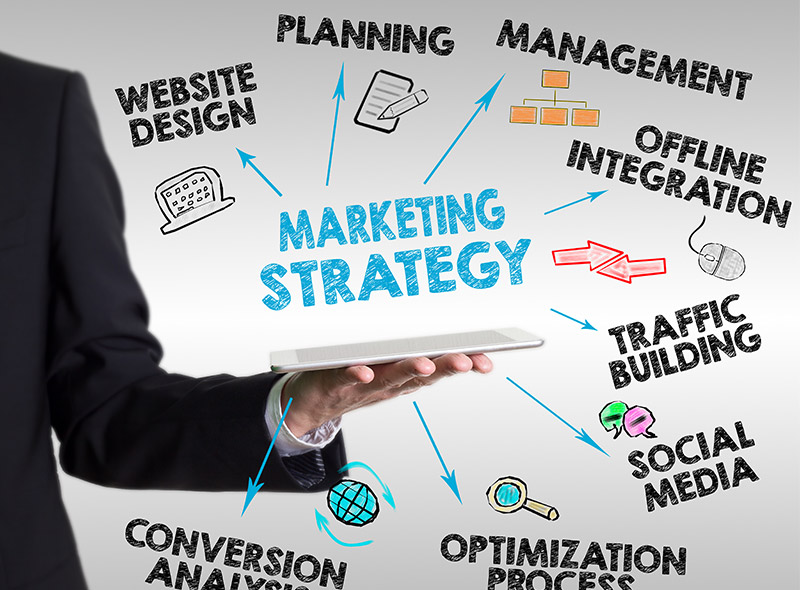
The strongest campaigns connect the mailbox to the sales process. That means the offer, landing page, phone script, front desk process, email follow-up, and membership presentation all need to work together.
Here is a realistic example.
A health club mails 10,000 postcards to homes within a targeted radius. The offer is a 21-day trial with a fitness consultation. The postcard drives people to a landing page and includes a QR code for quick response. When a lead comes in, the club calls within five minutes during staffed hours. If the person does not answer, they receive a text and email follow-up. The appointment is booked as a tour and consultation, not just a free pass.
When the person arrives, the team already knows what offer they claimed. The front desk greets them warmly. A membership advisor asks about goals, schedule, past fitness experience, and what has stopped them before. After the tour, the advisor presents the right membership option and explains how the club will help them stay consistent.

That is a funnel.
The postcard creates attention. The landing page captures the lead. The staff turns the lead into an appointment. The sales process turns the appointment into a member. The onboarding process helps retain that member.
Without that funnel, even a beautiful mail piece can underperform.
This is where Members Today often helps clubs tighten the gaps. We look at the offer, list strategy, design, tracking, follow-up, and conversion path. A direct mail campaign is not just a print job. It is a membership acquisition system.
What Makes a Direct Mail Offer Trustworthy?
A trustworthy offer is clear, specific, and believable.
Many clubs hurt their own results by trying to sound too exciting. “Best deal ever.” “Limited time only.” “Life-changing results.” “No excuses.” These lines can work in small doses, but they can also sound like every other fitness ad.
People trust offers that feel simple.
A strong offer might be:
“Try the club for 14 days for $14.”
“Get started with a free fitness consultation and 7-day club pass.”
“Join this month and save on enrollment.”
“Founders memberships now available before our grand opening.”
“Bring this postcard in for a family fitness pass.”
These offers are easy to understand. They do not ask the prospect to decode the promotion. They also give the sales team a clean reason to start a conversation.
In health club marketing, the offer should match the club’s sales model. If the club depends on monthly dues, the campaign should drive membership conversations. If the club sells personal training, the offer should include a consultation or starter session. If the club is family-focused, the offer should speak to parents, schedules, youth programs, childcare, or family value.
Cost-per-lead also matters.
Digital leads can look cheap at first glance, but low-quality leads can waste staff time. Direct mail may produce a different cost-per-lead, but the leads are often local and more grounded in the market area. A person who responds from a targeted household near the club can be more valuable than a broad digital lead who filled out a form with little intent.
The real number to watch is not just cost-per-lead. It is cost per appointment, cost per show, cost per sale, and first-month revenue collected.
That is how serious operators judge a campaign.
Direct Mail and Digital Work Better Together
This is not a direct mail versus digital argument.
The best fitness marketing uses both.
Direct mail can create the first trusted impression. Digital can reinforce it. A prospect may see the postcard, visit the website, check reviews, search the club name, click a retargeting ad, and then book a tour three days later. That path is normal.
A direct mail campaign can be paired with PPC ads, local SEO, email marketing, social retargeting, and landing pages. When the same offer and message appear across channels, the club feels more established. The prospect sees the brand in more than one place. That repetition builds comfort.
For example, a January campaign might include:
- A direct mail postcard sent to nearby households.
- Google Ads targeting “gym near me” and related local searches.
- A landing page built around a New Year starter offer.
- Retargeting ads for visitors who did not convert.
- Email follow-up for leads who claimed the offer but did not schedule.
- Front desk call scripts for fast appointment booking.
This type of campaign works because every part supports the same goal. It does not feel scattered. It feels organized.
That is one of the biggest mistakes we see in health club marketing. A club runs one offer on Facebook, another offer on a postcard, a different offer on Google, and an outdated offer on the website. The staff is not sure what to say when calls come in. The lead gets confused. Confusion kills conversion.
Consistency builds trust.
Why Direct Mail Can Improve Membership Conversion
Direct mail often helps before the sales conversation even starts.
When someone brings in a postcard, they have already seen the offer. They have already looked at the club name and location. They may have talked about it at home. They may have visited the website before walking in. That makes the sales conversation warmer.
The membership advisor does not have to start from zero.
A good postcard can also frame the value of the club. It can highlight group classes, coaching, childcare, personal training, recovery areas, clean facilities, or family memberships. That means the prospect walks in with a better idea of what the club offers.
The best conversion happens when the marketing and sales experience match.
If the postcard feels friendly and supportive, the tour should feel friendly and supportive. If the campaign promotes beginner-friendly fitness, the staff should avoid making the prospect feel intimidated. If the offer includes a consultation, the consultation should be real, not a rushed sales pitch.
People can sense the difference.
Membership growth depends on trust at every step. The mailbox message creates the first signal. The website confirms it. The phone call supports it. The tour proves it. The onboarding experience keeps it alive.

Retention Starts Before the Member Joins
A lot of clubs separate acquisition and retention. That is a mistake.
The way a person joins affects how long they stay.
If the marketing overpromises, the new member may cancel quickly. If the offer attracts bargain hunters only, retention may suffer. If the sales process skips goal-setting, the member may not build a routine. If onboarding is weak, the new member may disappear after two visits.
Good Health Club Direct Mail Marketing should attract the right people, not just any people.
A family club may want households with children in nearby neighborhoods. A premium fitness club may want higher-income households within a realistic drive time. A training-focused club may want adults interested in coaching and accountability. A new gym may want broad awareness first, then tighter targeting as it learns who converts best.
Direct mail lists can be built around geography, household income ranges, age groups, homeownership, family status, and other practical filters. The goal is not to invade privacy. The goal is to avoid waste and speak to people who are most likely to care.
Retention can also be supported after the sale.
Clubs can use mail for referral campaigns, win-back offers, anniversary messages, seasonal challenges, and community events. A former member who ignores emails may still notice a postcard inviting them back. A current member may hand a guest pass postcard to a friend. A local family may respond to a summer youth fitness promotion after seeing it at home.
Trust is not built in one touch. It is built through repeated, useful contact.
Common Gym Marketing Mistakes Direct Mail Can Fix
Many health clubs struggle because their marketing is too reactive.
They wait until lead flow drops, then rush out an offer. They copy another gym’s promotion. They rely too much on boosted posts. They send traffic to a weak website. They do not track calls. They do not train the front desk on the campaign. They blame the channel when the process is the real problem.
Direct mail can help bring structure back to the campaign.
It forces the club to decide who it wants to reach, what offer it wants to make, when the campaign should hit, and how the staff should respond. That planning alone can improve results.
A strong health club direct mail campaign needs practical details:
- The mailing radius should match real driving behavior.
- The list should reflect the target member.
- The offer should be easy to understand.
- The design should look like the club’s brand.
- The landing page should match the postcard.
- The phone number should be trackable when possible.
- The staff should know the offer before mail lands.
Follow-up should happen fast.
These details are not glamorous, but they matter. We have seen clubs lose leads because no one answered the phone with confidence. We have seen good offers fail because the website did not mention the same promotion. We have seen clubs mail too far from the facility and wonder why response was soft.
Direct mail is powerful, but it rewards discipline
AI content is not going away. Digital marketing is not going away. Automation is not going away.
But people still want to know that a real business is behind the message.
That is the opportunity.
For health clubs, trust is the bridge between interest and action. A person may want to get fit, but they need to feel safe enough to start. They need to believe the club can help. They need to believe the offer is real. They need to believe they will be treated with respect when they walk in.
Direct mail helps create that feeling because it is physical, local, and intentional.
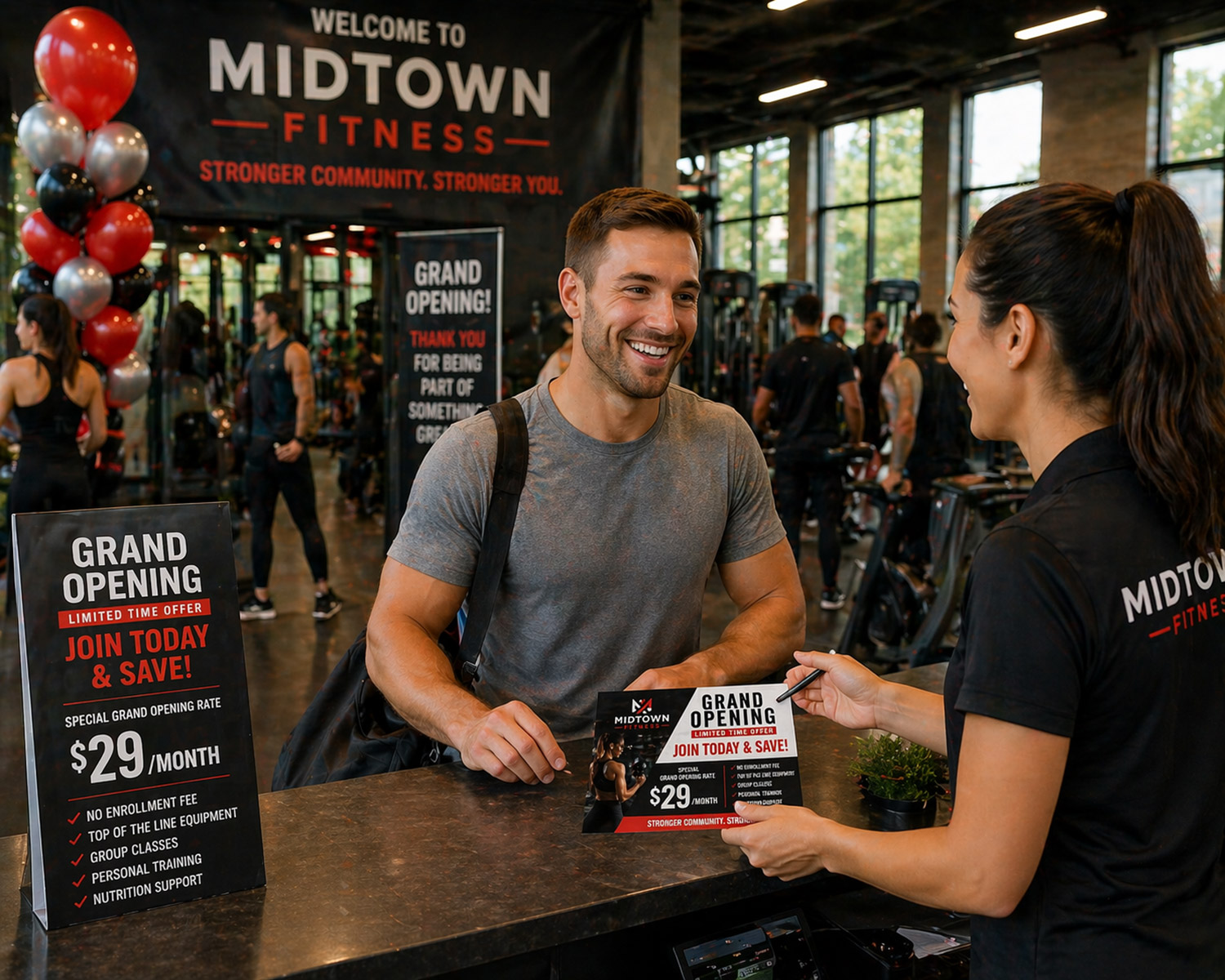
At Members Today, we believe the best marketing does not just chase clicks. It creates confidence. It gives people a reason to respond and a clear path to take the next step. Fitness direct mail promotions, PPC campaigns, local SEO, email, and sales follow-up all work better when they are built around a real message and a real member journey.
In a world where content can feel disposable, direct mail gives your club something durable.
It puts your brand in the hands of local people. It gives your offer a longer shelf life. It helps your club look established before the prospect ever visits. When paired with smart digital follow-up and a strong sales process, it can turn local attention into tours, memberships, referrals, and long-term growth.
That is the kind of trust health clubs need right now.
And it is the kind of trust Health Club Direct Mail Marketing is built to create.
FAQ
Most clubs benefit from sending campaigns around key sales windows such as January, spring, summer, back-to-school, and year-end promotions. Clubs with aggressive growth goals may mail monthly or quarterly depending on budget and market size.
Oversized postcards often perform well because they stand out in the mailbox and give enough room for the offer, club photos, benefits, and call to action. The right size depends on the campaign goal and budget.
It depends on the club’s sales strategy. Some clubs use price-based offers to create fast response, while others use consultation-based offers to protect value and start a stronger sales conversation.
Yes. Direct mail can increase brand recognition and make digital ads more effective because prospects may recognize the club after receiving the postcard at home.
Track calls, QR scans, landing page visits, form fills, appointments booked, shows, memberships sold, and revenue collected. This gives a clearer picture than response rate alone.
It works for both. New gyms can use it to build awareness and pre-sale memberships, while established gyms can use it for seasonal offers, win-back campaigns, referrals, and market reactivation.
A club can mail guest passes, referral postcards, or “bring a friend” promotions to current members and nearby households. This gives members a simple tool to share with friends and family.
Real club photos, a clear local address, a believable offer, simple wording, and consistent follow-up all help the campaign feel more credible. People trust marketing that feels specific and easy to understand.